
Tổng hợp 30+ đề VSTEP Speaking Part 1 kèm Sample Answer
Phần VSTEP Speaking Part 1 tuy ngắn nhưng lại quyết định rất lớn đến tâm lý và phong độ của thí sinh trong toàn bộ bài thi nói. Vì thế, trong bài viết sau, VSTEP E-Learning sẽ tổng hợp 30+ đề VSTEP Speaking Part 1 kèm sample answer chi tiết, giúp bạn luyện tập hiệu quả, mở rộng ý tưởng và tự tin hơn khi bước vào phòng thi. Cùng tìm hiểu ngay!
Giới thiệu chung về phần thi VSTEP Speaking Part 1
VSTEP Speaking được thiết kế để kiểm tra toàn diện các kỹ năng nói cốt lõi, bao gồm tương tác xã hội, thảo luận và trình bày – phát triển một chủ đề. Thí sinh không chỉ cần trả lời đúng trọng tâm mà còn phải thể hiện khả năng diễn đạt mạch lạc, sử dụng ngôn ngữ phù hợp và phản xạ tự nhiên trong giao tiếp.
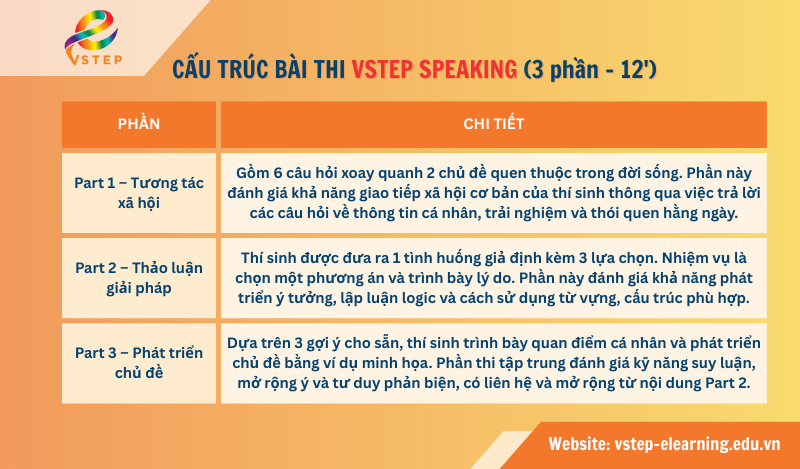
Về cấu trúc, bài thi Speaking trong VSTEP gồm 3 phần liên tiếp, với mức độ tăng dần:
- Phần 1 – Tương tác xã hội: Thí sinh trả lời 6 câu hỏi xoay quanh 2 chủ đề quen thuộc, mỗi chủ đề gồm 3 câu hỏi. Nội dung thường liên quan đến bản thân, học tập, công việc, thói quen hoặc đời sống hằng ngày. Đây là phần giúp giám khảo đánh giá khả năng phản xạ và giao tiếp cơ bản.
- Phần 2 – Thảo luận giải pháp: Thí sinh được cung cấp một tình huống cụ thể kèm theo 3 phương án giải quyết, yêu cầu lựa chọn giải pháp phù hợp nhất và nêu lý do, đồng thời phản biện các phương án còn lại.
- Phần 3 – Phát triển chủ đề: Thí sinh trình bày một chủ đề cho sẵn, có thể dựa trên gợi ý hoặc tự phát triển ý tưởng riêng, sau đó trả lời các câu hỏi mở rộng nhằm đánh giá khả năng lập luận và trình bày quan điểm.
Tổng hợp đề VSTEP Speaking Part 1 kèm Sample Answer
Việc luyện tập với các đề VSTEP Speaking Part 1 kèm sample answer giúp thí sinh làm quen với dạng câu hỏi thường gặp, mở rộng ý tưởng trả lời và học cách sử dụng từ vựng – cấu trúc câu. Khám phá ngay!
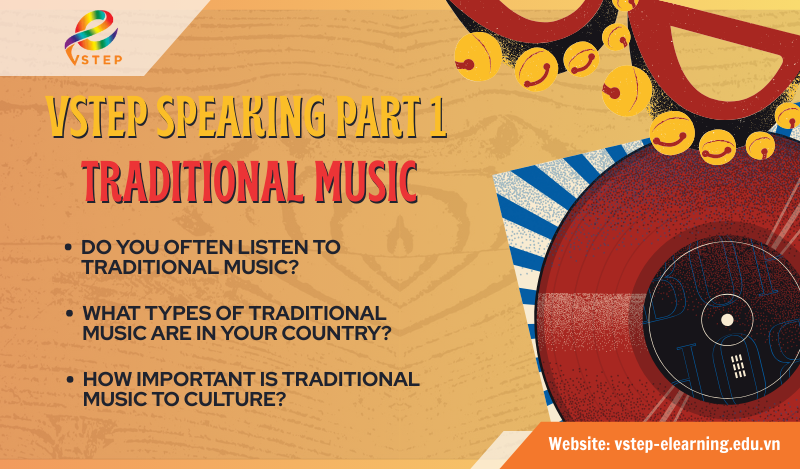
TEST 1: TRADITIONAL MUSIC
Do you often listen to traditional music?
Yes, I do, but not very often. I usually listen to traditional music on special occasions or at cultural festivals because it helps me better understand my country’s heritage.
What types of traditional music are in your country?
My country is home to a diverse range of traditional music, including folk songs, traditional instrumental pieces, and ceremonial music. Each type has its own style and meaning. They often reflect local history, customs, and daily life.
How important is traditional music to culture?
Traditional music plays a vital role in preserving cultural identity and collective memory. It reflects a community’s history, values, and social traditions passed down through generations. Through traditional music, cultural heritage is kept alive and shared with younger generations. Therefore, it helps maintain cultural continuity in an increasingly globalised world.
TEST 2: COOKING
Have you ever been in a cooking class?
Yes, I have attended a cooking class before, and it was a very enjoyable experience. I learned how to prepare simple traditional dishes. The class also helped me become more confident in the kitchen.
Do you prefer to join a cooking class alone or with someone?
I prefer joining a cooking class with friends or family members. Cooking together makes the class more fun and less stressful. We can share ideas and support each other while learning new recipes.
What are the benefits of cooking?
Cooking offers many benefits, including better control over nutrition and healthier eating habits. It helps develop practical life skills and creativity through experimenting with ingredients and flavours. Cooking can also reduce stress and strengthen relationships when shared with family or friends. Additionally, it saves money compared to eating out regularly.
TEST 3: TIME MANAGEMENT
What do you do to manage your time?
To manage my time effectively, I usually make a daily schedule and set clear priorities. I try to finish important tasks first. This helps me avoid pressure and work more productively.
Is time management important? Why?
Yes, time management is very important because it helps people use their time effectively and stay organized. It allows individuals to balance work, study, and personal life more efficiently. Good time management also reduces stress and increases productivity. As a result, people are more likely to achieve their goals on time.
Do most workers have enough time to relax nowadays? Why?
In my opinion, most workers do not have enough time to relax nowadays. They often face heavy workloads and long working hours. As a result, it is difficult for them to balance work and personal life.
TEST 4: A BEAUTIFUL PLACE
What is that place?
One beautiful place that left a strong impression on me is Ha Long Bay. It is famous for its limestone islands and clear blue water. The scenery there is truly breathtaking and peaceful.
What is the best way to go there?
The best way to go there is by traveling from Hanoi. You can take a bus or a private car, which usually takes about 2–3 hours. This is the most convenient and popular option for visitors.
When is the best time to go there?
The best time to visit Ha Long Bay is from April to June. During this period, the weather is pleasant and not too hot. It is ideal for sightseeing and outdoor activities.
>> Tham khảo thêm các khóa luyện đề VSTEP chất lượng tại đây:
- Khóa luyện A1 – B2 online
- Khóa luyện A2 – B2 online
- Khóa luyện A1 – B2 online có giáo viên
- Dịch vụ chấm – chữa đề I Luyện thi Vstep Online
TEST 5: WEATHER
What is the weather like in your hometown?
The weather in my hometown is quite typical of a tropical area, with hot summers and mild winters. It can be very humid, especially in the rainy season. Sometimes, sudden rain causes inconvenience.
Is there any difference in the weather in different parts of Vietnam?
Yes, there are clear differences in the weather in different parts of Vietnam. The North has four seasons, with cold winters and hot summers, while the Central region often experiences heavy rain and storms. In contrast, the South has a tropical climate with only two main seasons: the dry season and the rainy season.
Do you prefer dry or wet weather?
I prefer dry weather because it is more comfortable for daily activities. Dry weather also makes travelling easier and safer. I usually feel more energetic on sunny days.
TEST 6: PLANT
Do Vietnamese people send plants as gifts?
Yes, Vietnamese people often send plants as gifts, especially on special occasions such as housewarmings, Tet holidays, or business openings. Plants are believed to bring good luck, prosperity, and positive energy.
What plant did you grow when you were young?
When I was young, I grew small plants like green onions and chili plants at home. This helped me become more patient and responsible. It was also exciting to see the plants grow and produce food.
TEST 7: EAT OUT
How often do you eat out?
I eat out about once or twice a week, usually at weekends as it helps me reduce stress after a busy week. However, during weekdays, I prefer eating at home because it is healthier and saves money.
Do you prefer eating out with your friends or family?
I prefer eating out with my family because it gives us time to talk and bond together. Family meals are usually more relaxed and comfortable. However, eating out with friends is also enjoyable because we can share experiences and have fun conversations. It depends on the occasion.
TEST 8: NEWSPAPER
Do you often read newspapers? When?
I do not read printed newspapers very often, but I read online news almost every day. I usually check the news in the morning or during breaks. Reading the news helps me stay updated with current events. It is also useful for learning new vocabulary.
How do people in your country get daily news?
Most people in my country get daily news through the internet, especially social media and news websites. Smartphones make it easy to access information quickly. Television is still popular among older people. Printed newspapers are becoming less common nowadays.
TEST 9: FLOWERS
What is your favorite flower? Why?
My favorite flower is the lotus because it is a symbol of purity and strength. It grows in muddy water but still looks clean and beautiful. This flower represents positive values in life. It also reminds me of the traditional culture in my country.
Why are flowers so important in life?
Flowers play an important role in making life more beautiful and meaningful. They are often used to express emotions such as love, respect, and sympathy. Flowers can improve people’s mood and reduce stress. They are also connected to important events like weddings and festivals.
TEST 10: DANCE
Do you like dancing? Why?
Yes, I like dancing because it helps me relax and feel more confident. Dancing is a good way to release stress after studying or working. It also improves physical health. I feel more energetic when I dance regularly.
What type of dance do you enjoy the most?
I enjoy modern dance the most because it is dynamic and creative. This type of dance allows people to express their feelings freely. The music is also lively and motivating. It suits young people very well.
Do you prefer dancing alone or in a group? Why?
I prefer dancing in a group because it is more fun and social. Group dancing helps me connect with others and build teamwork skills. It also creates a lively atmosphere. Dancing together makes the experience more enjoyable.
TEST 11: FARM
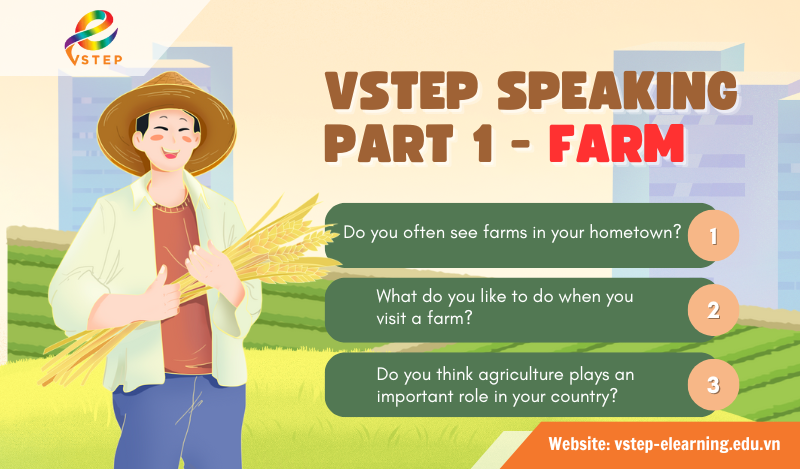
Do you often see farms in your hometown?
Yes, I often see farms in my hometown because it is located near rural areas. Many families grow vegetables or raise animals such as chickens and pigs. Farms are an important part of local life. They provide fresh food for both residents and markets.
What do you like to do when you visit a farm?
When I visit a farm, I enjoy walking around and observing how farmers work. I like feeding animals and learning about how crops are grown. Being on a farm helps me feel relaxed and closer to nature. It is also a good break from city life.
Do you think agriculture plays an important role in your country?
Yes, I think agriculture plays a very important role in my country. It provides jobs for a large number of people and supplies food for both domestic consumption and export. Agriculture also contributes significantly to the national economy and supports rural development.
TEST 12: BIRTHDAY
Do you usually celebrate your birthday?
Yes, I usually celebrate my birthday, but in a simple way. I often have a small meal with my family or close friends. For me, spending time together is more important than big parties. It makes the day more meaningful.
What did you do on your latest birthday?
On my latest birthday, I had dinner with my family at home. They prepared some of my favorite dishes and a small cake. We talked, took photos, and enjoyed the time together. It was a warm and memorable celebration.
TEST 13: COLLECTIONS
Do you have any collections? If yes, how long have you had it?
Yes, I have a small collection of books, mainly novels and self-help books. I started collecting them when I was in high school. Reading has become a habit over the years. My collection has grown gradually.
What are some benefits of collecting something?
Collecting something helps people relax and reduce stress. It also allows them to develop patience and long-term interests. Collections can be a source of knowledge and personal satisfaction. In some cases, they may even have financial value.
TEST 14: ART
Do you love art?
Yes, I enjoy art because it helps me express emotions and ideas in a creative way. Art can make life more colourful and meaningful. I often feel relaxed when looking at artworks. It also improves my imagination.
What type of art would you like to learn?
I would like to learn painting, especially watercolour painting. This type of art looks gentle and expressive. Learning to paint could help me reduce stress. It would also allow me to create something meaningful by myself.
>> Xem thêm: Tổng hợp từ vựng các màu bằng tiếng Anh
TEST 15: WEDDING
Have you ever been to a wedding party?
Yes, I have attended several wedding parties, mostly of relatives and close friends. Vietnamese wedding parties are usually lively and joyful. They are important social events. I always enjoy the atmosphere.
What do you like best at a wedding party?
What I like best is the happy and warm atmosphere. Everyone dresses nicely and shares joy with the couple. I also enjoy the traditional customs and delicious food. It makes the event very memorable.
TEST 16: DICTIONARIES
Have you ever used a dictionary?
Yes, I have used a dictionary for many years, especially when learning English. I started using dictionaries when I was in secondary school. They helped me understand new words better. I still use them regularly today.
What do you use for it?
I mainly use a dictionary to check the meaning, pronunciation, and usage of new words. Sometimes, I also look up synonyms and example sentences. This helps me use vocabulary more accurately. It is very useful for studying and working.
TEST 17: LIBRARY
Do you usually go to the library?
Yes, I usually go to the library, although not very frequently. I often visit the library when I need a quiet place to study. The peaceful environment helps me concentrate better. It is also a good place to find useful books.
How long do you usually spend at the library?
When I go to the library, I usually spend about one to two hours there. During that time, I read books or work on assignments. I try to make good use of the time. I feel quite productive when studying there.
TEST 18: BANKING SERVICE
Have you ever used banking services in your area?
Yes, I have used banking services in my area for a long time. I often use banks for saving money and making transfers. The services are quite convenient. Most transactions are simple and fast.
How often do you use banking services?
I use banking services almost every day through mobile banking apps. I make payments, check my balance, or transfer money online. I only visit the bank in person when necessary. Online services save me a lot of time.
TEST 19: BAGS
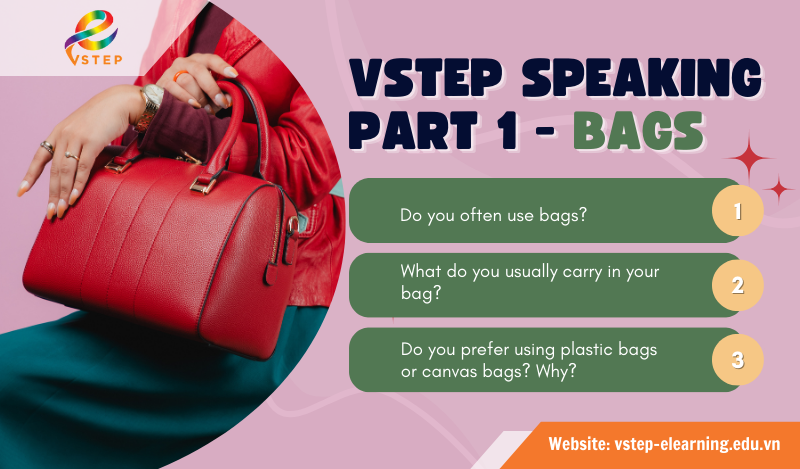
Do you often use bags?
Yes, I use bags every day because they are very practical. I usually carry a backpack when I go to work or study. Using a bag helps me keep my belongings organised. It is also more convenient than carrying things by hand.
What do you usually carry in your bag?
In my bag, I usually carry my wallet, phone, keys, and some personal items. I also bring a notebook and a bottle of water. Sometimes, I carry a laptop or documents. Everything is arranged neatly.
Do you prefer using plastic bags or canvas bags? Why?
I prefer using canvas bags because they are reusable and more environmentally friendly. They are stronger and can carry heavier items without breaking. Using canvas bags also helps reduce plastic waste and protect the environment.
TEST 20: HAPPINESS
Are you a happy person? Why?
Yes, I consider myself a fairly happy person. I try to stay positive and appreciate small things in life. Having supportive family and friends makes me feel secure. This helps me maintain a good mood.
What usually makes you happy?
Simple things usually make me happy, such as spending time with loved ones. Achieving small goals at work or study also brings satisfaction. Listening to music or relaxing in my free time helps me feel happier. These moments are very important to me.
>> Xem thêm: Tổng hợp đề mẫu Speaking VSTEP FULL mới nhất
TEST 21: DAY OFF
Do you often have days off?
Yes, I usually have days off on weekends. After a busy working or studying week, these days are very important to me. They give me time to rest and recharge. I always look forward to them.
What do you do on your days off?
On my days off, I usually sleep a bit longer and relax at home. Sometimes, I meet friends or spend time with my family. I also enjoy watching movies or reading books. These activities help me feel refreshed.
TEST 22: MORNING HABITS
Do you like getting up early in the morning?
Yes, I like getting up early because the morning is quiet and peaceful. I feel more energetic and focused at that time. It helps me start the day in a positive way. I can get more things done.
Do you spend your mornings doing the same things on both weekends and weekdays?
No, my morning routine is quite different. On weekdays, I wake up early and prepare for work or study. At weekends, I usually sleep longer and relax. My mornings are more flexible than.
TEST 23: CHILDHOOD
Do you remember your childhood?
Yes, I remember my childhood quite clearly. It was a simple and happy time with fewer worries. I spent a lot of time playing with friends. These memories are very special to me.
What did you usually do during your childhood?
During my childhood, I usually played outdoor games with neighborhood friends. I also helped my parents with small household chores. In my free time, I like watching cartoons and reading comics. Life was simple but joyful.
>> Tham khảo thêm các khóa ôn luyện VSTEP online nổi bật:
- Khóa luyện mất gốc Online – Luyện thi Vstep
- Khóa luyện thi A1 – B1 Online có giáo viên dạy kèm
- Khóa luyện A1 – B2 online
- Khóa luyện đề B2 online
TEST 24: GIFTS
Do you often give gifts to other people?
Yes, I often give gifts on special occasions such as birthdays or holidays. Giving gifts is my way of showing care and appreciation. It makes relationships closer. I enjoy seeing others feel happy.
What kinds of gifts do you prefer?
I prefer giving practical and meaningful gifts. For example, books, handmade items, or useful accessories. I usually choose gifts based on the person’s interests. This makes the gift more special.
TEST 25: SIGHTSEEING
Where do you often go sightseeing?
I often go sightseeing to famous landmarks or natural places near my city. These places are easy to reach and not too crowded. They are perfect for short trips. I enjoy exploring new environments.
What do you like to do when you go sightseeing?
When I go sightseeing, I like taking photos and enjoying the scenery. I also try local food and learn about local culture. Walking around and observing daily life is interesting. It makes the trip more memorable.
TEST 26: BUSES
Do you often use buses? Why/Why not?
Yes, I use buses quite often, especially when travelling within the city. Buses are convenient and help me avoid traffic congestion. They are also much cheaper than using a private vehicle. In addition, I can relax or check my phone during the journey.
What are the benefits of traveling by bus?
Travelling by bus is cost-effective and environmentally friendly. It helps reduce traffic jams and air pollution. Buses are usually well-connected to many areas in the city. This makes public transport a practical choice for daily commuting.
TEST 27: SELF-CARE
Do you take care of yourself?
Yes, I believe self-care is very important, especially in a busy modern lifestyle. Taking care of myself helps me stay healthy both physically and mentally. It also allows me to work more efficiently. Therefore, I try to make time for self-care regularly.
How do you take care of yourself?
I take care of myself by maintaining a balanced diet and exercising regularly. I also try to get enough sleep and avoid too much stress. In my free time, I relax by listening to music or reading books. These habits help me feel refreshed.
TEST 28: GREEN TEA
Do you often drink green tea?
Yes, I drink green tea quite often because it is good for my health. It helps me feel relaxed and more focused. I also enjoy its light and natural taste. Drinking green tea has become a daily habit for me.
When do you usually drink green tea?
I usually drink green tea in the morning or in the afternoon. It helps me stay alert without feeling too excited like coffee. Sometimes, I drink it when chatting with family or friends. It creates a calm and pleasant atmosphere.
TEST 29: SUBJECTS
What was your favorite subject when you were a child?
When I was a child, my favorite subject was English. I enjoyed learning new words and communicating with others. The lessons were interesting and interactive. This subject also helped me become more confident.
Do you prefer studying alone or in a group? Why?
I prefer studying alone because it allows me to concentrate better. I can control my pace and focus on my weaknesses. However, group study can be useful for discussion. I usually combine both methods.
TEST 30: BOOKS
Do you often read books?
Yes, I read books quite regularly, especially in my free time. Reading helps me relax and reduce stress. It also improves my vocabulary and knowledge. Books are an important part of my daily life.
What kind of books do you enjoy reading?
I enjoy reading novels and self-development books. Novels allow me to explore different perspectives and cultures. Meanwhile, self-help books give me useful advice for personal growth. Both types are very inspiring.
TEST 31: MEALS
Do you usually have breakfast?
Yes, I usually have breakfast every day because it gives me energy for the morning. I prefer a light but nutritious meal such as bread, eggs, or noodles. Skipping breakfast makes me feel tired and less focused. Therefore, I consider it an important daily habit.
What dishes are commonly included in meals in your country?
Meals in my country often include rice as the main dish, served with vegetables and meat or fish. Soup is also an essential part of most meals. The dishes are usually well-balanced and not too oily. Family meals are an important cultural tradition.
TEST 32: COMPUTER
What is your computer brand?
My computer is a Dell laptop that I have been using for several years. It is quite reliable and suitable for daily tasks. The performance is stable and easy to use. Overall, I am satisfied with it.
What do you use a computer for?
I mainly use my computer for studying and working. It helps me prepare documents, do online research, and attend virtual meetings. In my free time, I also use it for entertainment. For example, I watch videos or listen to music.
Would you like to change your computer? Why/Why not?
At the moment, I do not really need to change my computer. It still works well and meets my needs. However, if I need more advanced features in the future, I may consider upgrading. It depends on my work requirements.
Phương pháp mở rộng câu trả lời Part 1 VSTEP Speaking
Để mở rộng ý tưởng một cách tự nhiên, người học có thể áp dụng chiến lược đặt câu hỏi 5W1H (What, When, Where, Why, Who, How) cho vấn đề đang được đề cập. Cách làm này giúp bài nói mạch lạc hơn, đầy đủ nội dung và thể hiện rõ năng lực giao tiếp ở trình độ B1–B2.
- What (Cái gì?): Trước tiên, người nói cần xác định rõ đối tượng hoặc hoạt động đang được nhắc đến. Việc giải thích “đó là gì” giúp người nghe hiểu bối cảnh chung và tạo nền tảng cho các ý tiếp theo trong câu trả lời.
- When (Khi nào?): Yếu tố thời gian giúp câu trả lời trở nên cụ thể hơn. Việc đề cập đến thời điểm thường xuyên hay một khoảng thời gian nhất định cho thấy khả năng sử dụng thì và cấu trúc ngữ pháp linh hoạt.
- Where (Ở đâu?): Thông tin về địa điểm giúp nội dung trở nên sinh động và rõ ràng. Đây cũng là cơ hội để thí sinh sử dụng các giới từ chỉ nơi chốn một cách chính xác.
- Why (Tại sao?): Đây là phần quan trọng để phát triển ý sâu hơn, thể hiện quan điểm cá nhân. Việc giải thích lý do giúp bài nói có tính logic và thuyết phục hơn.
- Who (Ai?): Nhắc đến những người liên quan giúp câu trả lời mang tính thực tế và gần gũi. Điều này đặc biệt phù hợp với các câu hỏi về gia đình, bạn bè hoặc đồng nghiệp.
- How (Như thế nào?): Cuối cùng, mô tả cách thức hoặc cảm nhận cá nhân sẽ giúp hoàn thiện câu trả lời, tạo sự trôi chảy và thể hiện khả năng diễn đạt tự nhiên.
Lưu ý khi thi Speaking giao tiếp xã hội trong VSTEP
Bên cạnh việc phát triển ý, thí sinh cũng cần chú ý đến cách trình bày để bài nói đạt hiệu quả cao trong phần giao tiếp xã hội của bài thi VSTEP Speaking.
- Tránh sử dụng toàn câu đơn: Việc lạm dụng câu đơn khiến bài nói rời rạc và đơn điệu. Thí sinh nên kết hợp câu ghép, câu phức đơn giản để thể hiện trình độ ngôn ngữ tốt hơn.
- Đảm bảo sự liên kết giữa các câu: Sử dụng các từ nối như and, because, so, however giúp bài nói mạch lạc, logic và dễ theo dõi hơn đối với giám khảo.
- Tránh lỗi lặp từ: Lặp lại cùng một từ nhiều lần sẽ làm giảm chất lượng bài nói. Thí sinh nên linh hoạt dùng từ đồng nghĩa hoặc diễn đạt lại ý bằng cấu trúc khác.
- Chú trọng ngữ pháp, từ vựng, phát âm, độ lưu loát và bố cục nội dung: Đây là những tiêu chí chấm điểm cốt lõi trong VSTEP Speaking. Một bài nói tốt cần đảm bảo tính chính xác, phát âm rõ ràng, nói trôi chảy và có bố cục hợp lý.
Tại sao nên ôn thi VSTEP online tại VSTEP E-Learning?

Trong bối cảnh học tập và làm việc ngày càng bận rộn, việc lựa chọn một hình thức ôn thi linh hoạt và hiệu quả là điều nhiều người quan tâm. Ôn thi VSTEP online tại VSTEP E-Learning mang đến giải pháp học tập chủ động, giúp người học có thể ôn luyện mọi lúc, mọi nơi mà không bị giới hạn bởi thời gian hay khoảng cách. Chỉ cần một thiết bị có kết nối Internet, học viên đã có thể tiếp cận đầy đủ nội dung ôn thi VSTEP một cách thuận tiện và tiết kiệm thời gian.
Điểm nổi bật của VSTEP E-Learning nằm ở lộ trình học được xây dựng bài bản và bám sát cấu trúc đề thi VSTEP mới nhất. Nội dung ôn tập được thiết kế theo từng trình độ, giúp người học dễ dàng xác định mục tiêu và theo đúng hướng ngay từ đầu. Thay vì học lan man, học viên được tập trung vào các dạng bài thường gặp, tiêu chí chấm điểm và chiến lược làm bài phù hợp, từ đó nâng cao hiệu quả ôn luyện và cải thiện điểm số rõ rệt.
Bên cạnh đó, hệ thống bài giảng và tài liệu tại VSTEP E-Learning được trình bày rõ ràng, dễ hiểu và phù hợp cả với những người mất gốc tiếng Anh. Các bài học được kết hợp giữa video hướng dẫn, tài liệu học tập và bài tập thực hành, giúp người học rèn luyện đầy đủ cả bốn kỹ năng Nghe, Nói, Đọc và Viết. Việc học không chỉ dừng lại ở lý thuyết mà còn chú trọng vào khả năng ứng dụng thực tế trong phòng thi.
Một lợi thế khác khiến nhiều học viên lựa chọn VSTEP E-Learning là hệ thống luyện đề VSTEP online chất lượng cao. Các đề thi thử được xây dựng sát với đề thi thật, giúp người học làm quen với áp lực thời gian và cấu trúc bài thi. Thông qua kết quả luyện đề, học viên có thể đánh giá chính xác trình độ hiện tại, nhận ra điểm mạnh và điểm yếu của bản thân để điều chỉnh kế hoạch ôn tập một cách hợp lý. Đăng ký tư vấn lộ trình ngay để rút ngắn thời gian ôn thi và tránh học lan man, bạn nhé!

Tổng kết
Hy vọng bài tổng hợp 30+ đề VSTEP Speaking Part 1 kèm Sample Answer đã cung cấp cho người học cái nhìn hệ thống các chủ đề thường gặp trong Part 1. Thông qua các sample answer chuẩn B2–C1, bạn có thể học cách triển khai ý, sử dụng từ vựng phù hợp và nâng cao phản xạ nói. Kết hợp luyện tập thường xuyên với lộ trình ôn thi tại VSTEP E-Learning sẽ giúp bạn tự tin hơn và đạt kết quả tốt trong kỳ thi VSTEP.


BÀI VIẾT LIÊN QUAN
VSTEP Speaking Part 3: Cập nhật đề thi và hướng dẫn làm bài
Công phá VSTEP Writing Task 2 theo dạng bài hay gặp
Chinh phục VSTEP Writing Task 1 theo dạng phổ biến
Remember to V hay Ving? Cách dùng và bài tập
Regret to V hay Ving: Phân biệt cách dùng và bài tập
Refuse to V hay Ving? Sự khác nhau Refuse và Deny